
In the creative world, we’ve been conditioned to believe that "The Pitch" is the path to success. We spend countless unpaid hours building decks and crossing our fingers, hoping to be "picked."
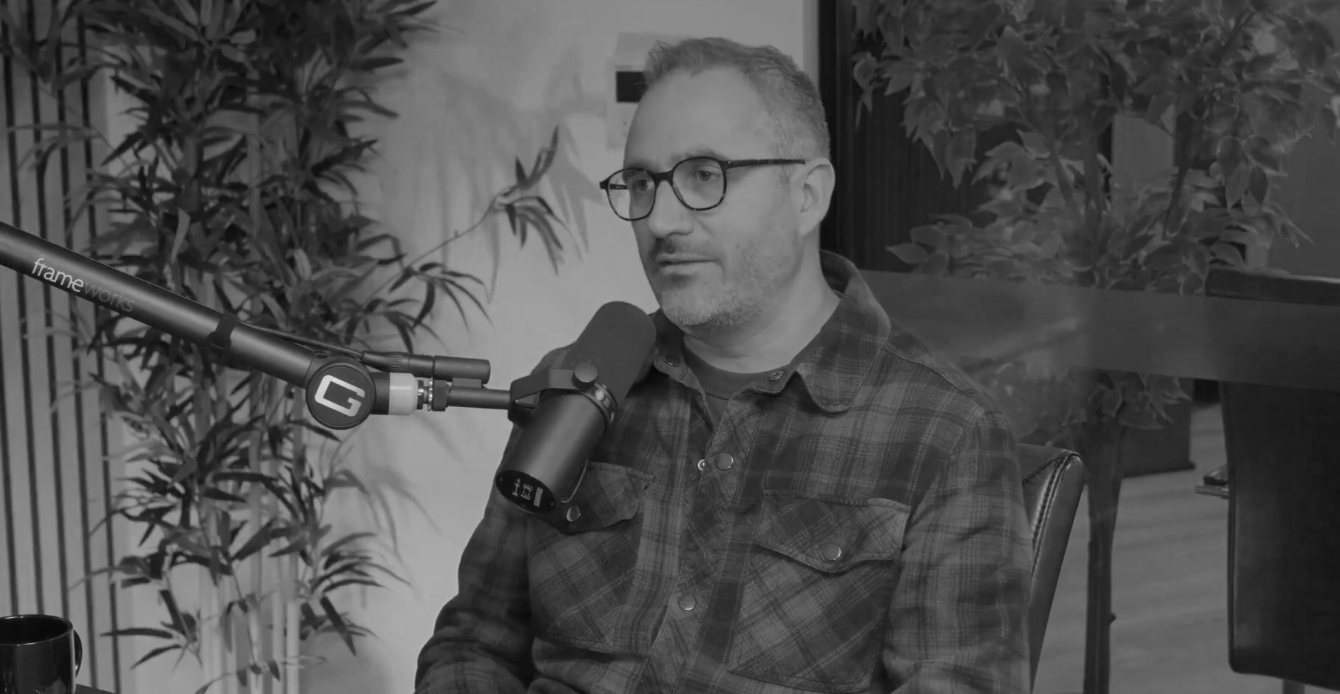
But as I discussed on the Agency Intensive Podcast, the traditional pitch is a trap. With over 25,000 agencies in the UK, more than McDonald's and Starbucks combined, standing out requires moving from a "vendor" mindset to an "expert" one.
Here are the five key lessons for agencies ready to stop auditioning and start leading:
1. Accept that Pitching is Gambling
Most agencies convince themselves they have a great shot, but in a five-way pitch, your best-case scenario is a 20% chance. Usually, one agency already has the "inside track," making your real odds even lower. If you wouldn't bet £20,000 of your own cash on those odds, stop betting your agency's time on them.
2. Master the "Four Conversations"
Sales isn't a single event; it’s a framework of four distinct stages: Probative, Qualifying, Value, and Closing. This structure ensures you stay in the "Expert" seat, leading the client through the process rather than being led by their demands.
3. The "Three-Year Coffee" Question
To uncover a client's true motivation, I ask: "We’re having coffee three years from now... what has happened to make you happy?" This shifts the focus from tactical asks (like a quick SEO campaign) to the long-term strategic value only an expert can provide.
4. Present Options, Not Proposals
Never send a single-price quote. Present three different ways to work with you. This moves the client’s mindset from "Should we hire you?" to "How should we hire you?" and allows you to offer an aspirational "Option 3" that they might not have even realized they needed.
5. Track Your RAB (Revenue Above Budget)
RAB is the metric that separates the order-takers from the experts. If a client has a £30k budget and you close them at £70k because you diagnosed a deeper problem, your RAB is £40k. Tracking this over a year proves you are selling expertise, not just filling orders.
You can watch the full episode of the podcast here.
-
Part 1: The Landscape and the Gambling Problem
Richard Hill: You know, what challenges are you seeing with agency senior leadership at the moment when it comes to sales?
Aaron Hutchinson: I think it's the—I mean you've just touched on it—but it's new business. It's pipeline. It's not making enough money, lack of profitability. It sounds horrendous, but these are the things that people are still worried about. I know like the last couple of years have been maybe tougher than previous years, but I don't think there's any big new problem other than maybe the environment is slightly tougher right now. But yeah, the age-old problems of making money and making money profitably. They're the big challenges.
Richard Hill: Yeah. And I think you maybe got to be a little bit tougher-skinned maybe in a couple of years ago. When I speak to agency founders is very much similar conversation when I see you know go to these different events and you know how's things well you know and you think oh we had the same conversation a year ago and and some people sort of are used to the the sort of those sort of quite cyclical things that come around and those difficult times but others that maybe not been in it as long are a bit like plck is hard work isn't it?
Aaron Hutchinson: Well, I think I was just going to say HD because you do you have uh why is it this why is it this age old problem and I guess you have the people have been around the block a few times if you don't mind to let yourself you know you know what I mean though but but also every year there's new agencies coming on board new agencies been created and then very quickly those same agencies start repeating the same mistakes that the agencies before them made and so new business continues to be the same problem and I do think there's um yeah I I think maybe just especially thinking about those newer agencies that startup. Um, are they are they set are they set up with a solid idea in mind or are they just sort of yeah there's sort of a a bit of a copy?
Richard Hill: Yeah, you see it don't you the new new guys on the block and obviously the the barriers to entry in this industry are minimal really you know you build a website you have a passion for a particular whether it's you know SEO Y performance web design and you go you know and you no doubt get a client or two from your mates or your dad's friends who've got businesses you know that's going back you know that's probably where a lot of people start you know with a couple of projects and then oh we got we got we got we got a bit of money coming in you know and we've got a few clients and and then we're going to be we're going to focus on getting this stuff done for these people and then you get that bit done. Hang on a minute. We maybe haven't got any more. Oh, new business. Where's the new Oh, and then we go again and it's like this hamster wheel of, you know, in the early days for sure and maybe many years later trying to get that balance of the doing and the selling and then passing some of that obviously as you start to build your headcount. Yeah, there's so many businesses and we've talked about it before, you know, there's uh something like 25,000 agencies out there in the UK alone and it's uh yeah, that make that makes it tough. And I but I I I don't think I think when these obviously we're talking about all kind of creative businesses here and agencies, but I think sometimes when those newer ones come online, they think, oh, it be great idea to set up this company and let's just, you know, maybe with a couple of mates, let's start let's start an agency. But I don't think they often realize quite how competitive the market is more than ever.
Aaron Hutchinson: More than ever. And then to your point, you know, and it's the same for myself as well in terms of I said myself two years ago, the first couple of bits you work you win, they're usually from some friendly, you know, they're people who are happy to give you a helping hand. Not that they don't need your help, but they're more likely to hire you. But very quickly, you have to start finding work from people who aren't so friendly. And that's that's where the challenge comes.
Richard Hill: Big difference, isn't there, between, oh, you've got some work coming from somebody, you know, or family, friend, or so forth, and that's great. You know, that's great. Well, maybe I don't know. I have a slightly different rule. I'm not a massive fan of working with friends, friends, and family, and I usually sort of pretend I don't do what I do, so I don't have to do the thing for the, you know, try to keep it a little bit separate. Obviously, the odd exception. Um but then as you say then winning a bit of fresh business from somebody that has never heard of you maybe three months ago to then maybe seeing you you know and then obviously we'll talk about that process a lot more detail shortly but basically winning a bit of business from a complete stranger two months ago whole different game from this this bit of business and that's a that's a big that's that big moment you know that's that's the gets the goosebumps going for me when you meet somebody for the first time and then you know over that period of Maybe hopefully a few weeks, maybe a few months quite likely, you become a brilliant client, you know, that's that's such a feeling. Obviously, winning it off your dad's mate. Yeah, that's that's cool, too.
Aaron Hutchinson: But I had I had one the other day, actually, um an agency an agency based in London and I've been they've been sort of on my list for a while. I I have met the owner a few times and I reached out to him probably two years ago to say look this I knew him from my you know when I was uh the MD of an agency but anyway he so he knew what I was doing but I've just been gently there in the background on my LinkedIn posting and this and this and the odd meeting here and there but today's you know now is not the right time. Got an email from him last week and it was just said now what does it say? It was something like um now's the time. that he thought and that was the subject of the email. I'm ready. I'm ready for you. And it was just like it was so cool. But it was just like but it was just it had it took probably two years for that email to drop. But yeah, it shows why you just have that's the reality guys of of this business.
Richard Hill: Um so you you know you said obviously there's so many agencies out there and I think something you said to me when we last um met up was um you know there's more agencies in the UK than there is McDonald's.
Aaron Hutchinson: I it's it's really I I like to uh I think it's really important to sometimes we talk about how many how many agencies are in this competitive market out there, but sometimes you just need a bit of context in terms of bringing that to life. Now, my maths are probably a little bit iffy, but it's somewhere in there. But yeah, there's 25 25,000 agencies, um something like 1500 McDonald's in the UK. Yeah. Uh i do there's another comparison I make with coffee shops and something like 5,000 big brand coffee shops compared to 25,000 agencies. I mean when I think of it that way that's the one really I think I can be in London and see an a coffee shop in every corner and then I think oh my gosh there's five times the amount of agencies.
Richard Hill: Yeah it's so true isn't it? It is so true. So pitching obviously ultimately you got to get quite good at pitching as an agency owner founder um and um I think you know we we spent a lot of time working together over this last year and working with our team for thank you for that but you know why do you believe agencies waste so much money and time pitching for business?
Aaron Hutchinson: It's a it's a it's a good question. I think fundamentally pitching is gambling. I if I really think about it, I your chances of winning a pitch are slim. Uh if you're in a three-way pitch, we can talk about the stats in a minute, but best best case scenario in a in a three-way pitch, you've got a 33% chance of winning. I don't believe that's the case, but fiveway pitch, they're not uncommon. Yeah. You know, best case, you got a 20% chance of winning. And it's just and and the reality of those numbers are that's not even true because what we we know the way that you know I think about these things is there's always one business in a pitch that has has the advantage. Always one. Yeah. Um i've been on the end of I've been successful in pitches when I knew I was that one. I'm sure I've lost many when I wasn't that one. Yeah. Uh, you know, the reality is there's probably one agency, let's say there's a three-way. Yeah. There's one agency that's probably got a 50 60%. Yeah. So, you're more like a 10% absolute outsider.
Aaron Hutchinson: And then another way to think about it is I think we can we can all convince ourselves about the brief comes in or the the you know the the proposal comes in. You go we can win this and you you convince yourself as an agency or as an individual that all so you convince yourself of all the reasons that you can win it and why you're a good fit and it just doesn't add up. And I don't think you people are honest enough about here's all the reasons that we're not a good fit and here's all the reasons why we're not going to win. And the reality is if let's say a pitch is going to cost you I don't know 20,000 uh to win that piece of work. If I was to ask any of your employees if you had to spend £20,000 of your own money to do this pitch how comfortable or confident would you feel? And I think you'd get a very different answer. And I think we we hide behind Yeah. We hide behind the business. But if we were truly to put our money where our mouth is, I don't think we'd enter half the amount of pictures that we do. It's a gamble.
Richard Hill: Yeah. Totally. And I think that will really resonate with the listeners. The the amount of pictures, no doubt that our collective listeners have done and look back and thought, "Yeah, we didn't really stand a chance. We convinced ourselves we did way more than we actually did. we're introduced as maybe just a number to to get that third third or second depending on the but the ones we have won. We think about the the the sort of commonality that they have and the themes and then the ones we didn't win ones we nowhere near one you know there's some patterns isn't there that you think you're just spending a lot of time Yep. which resource money ultimately you're wasting time and money which is obviously what you've been helping us with actually um you know for the last sort of six months or so um which brings us nicely into the win without pitching methodology which is what you know big part of what we wanted to get you here to talk about so obviously it's something we've embraced um over this last year at our agency been fairly transformational I would say but I think for those that haven't heard of it you know you know why does it work and what is it And yeah, good question.
Aaron Hutchinson: Win without pitching uh was started or and continues to be run by a guy called Blair Ends uh who's based in Canada. He wrote a book called good few years ago now called The Win without pitching manifesto. Um which is essentially a call to arms to the creative industry which is we're doing things wrong. uh as an industry we are going about new business in completely the wrong way and fundamentally we are wasting so much money on pitching we're giving away all of our value for free so it kind of starts with that kind of I guess core thought what win without pitching today is essentially a sales training company for for expert practitioners um what does that mean it's a way of selling uh it's a way of selling expertise. Yeah. Way of selling expertise before you can actually deliver it. You know, we're not selling we're not talking about selling products on the shelf here. Yeah. You know, if we're in the agency game, we're we're in the business of selling expertise and that does require a different way of selling. Um so what win without pitching now is and what you know what I talk a lot about and what I worked with you on is uh the model called the four conversations for selling expertise. And it's a way of breaking down the sale into four distinct conversations and really putting the onus on the business to lead the client through that sale as the expert. Yeah. Rather than be led and be told, right, I need SEO and I need to do this and this and this is what I need for two months. Well, that's just not a conversation you want to be having, is it? Or you don't want to be following that lead of conversation.
Aaron Hutchinson: Yeah. Then I I think you know I I would have put myself in this bracket from my agency days before I before I lent Yeah. you know before I learned kind of the the frameworks is none or very very few of us are taught how to sell in a creative agency or a marketing agency or any sort of similar type business. Usually we get into that business because we we're interested in the the doing bits. It's where if you know if you get into advertising because because you want to create campaigns for the brand or you get into design because you want to build brands and you want to design stuff you don't get in to sell and I you know and and that goes that really starts with the agency owners too you know because they created these businesses to do creative stuff the natural skill set is it the natural skill set is the doing the getting the results for the client creating the creative doing the ad campaigns creating the whatever it may be and so what you then what you then see happen is everybody and I say everybody There's exceptions of course, but everybody is just um they're making it up as they go along. They're going on gut feel. Yeah. They are winning and of course they are winning new business, but there's a lot of winning on personality, winning it on charm, building up relationships.
Part 2: The Framework and the "Three-Year Coffee" Question
Aaron Hutchinson: A bit of guesswork, but you know, for most people working in an agency environment, there's not much of a plan when it comes to selling. And really that's what win without pitching and the four conversations are all about is giving you the tools just to still come to the sale as yourself.
Richard Hill: So it's a framework.
Aaron Hutchinson: It's a framework. It's a framework to follow which sounds almost like an actual framework for agencies that you can follow that is sort of designed for agencies and other obviously professional services. Um so four conversations—I mean the key is obviously as the name suggests, there's four specific conversations that you ideally have. Maybe step us through those four.
Aaron Hutchinson: Yeah, that’d be good. Uh, four conversations. Conversation number one: the probative conversation. The probative conversation is actually not a conversation that you have. It's typically a conversation that your business is having with the world with you not present.
Richard Hill: So maybe somebody's listening to this podcast right now?
Aaron Hutchinson: Exactly. And they've watched or listened to lots of our podcasts and thought, "You know what, these guys at EcomOne/Agency Intensive, there's something there." We've never met them, we've never heard of them, but they're looking at our stuff. They're looking, they're peeping into our world of socials, some of our events maybe. It's everything that's basically enabling your business to show itself as an expert to the world. So it's your positioning, it's your thought leadership, it's your marketing, it's the events that you hold, it's the podcast that you record. If your probative conversation is strong, your potential customers out there should start seeing you as the expert, the potential solution to their problems, rather than just another vendor.
Richard Hill: That’s a key word: "another vendor." If you're just another vendor, it’s just a line item with no real relationship. It’s a tick-box exercise.
Aaron Hutchinson: That's kind of it. And what does the probative conversation do? It makes this "flip" happen. Your potential customer has been flipped. They now see you as the expert rather than the vendor. And that's a really powerful place to be. Ideally, you don't want to be the vendor. If they truly see you as the expert, they lean into you. They want to hear how you'll be able to help them.
Aaron Hutchinson: Conversation number two: the qualifying conversation. This conversation is really the very first in-person conversation that you're going to have with the client. The purpose of this conversation is to vet the opportunity. Is there actually an opportunity here between us two? Are we potentially a good fit for each other? There's a skill in qualifying and what we're really trying to uncover is a few key things that really help us to determine whether we should move forward together.
Aaron Hutchinson: Conversation number three: the value conversation. The value conversation is where we're trying to uncover what's the value we can create for the client beyond what they've just asked for. What are the metrics by which that would be determined? What would success look like? How much might the client pay for that value creation?
Aaron Hutchinson: And then finally, it's Conversation number four: the closing conversation. How do you actually close the deal? In between value and closing, we have the act of creating the proposal. It's not a conversation, but that's where we start thinking about, "Well, what are our ideas for solving this problem?"
Richard Hill: It sounds straightforward.
Aaron Hutchinson: Yeah, that's the beauty. These things should be simple. They should be applicable. Often, you know, I sort of joke, we're not teaching rocket science here. But if we go back to the idea that most people in creative businesses don't have a framework for sales, actually just having a simple framework is a game changer.
Richard Hill: Conversation one, we've touched on that, but a lot of it, as the name suggests, is very conversational, asking specific questions and ultimately guiding the process. You like to ask a lot of very specific types of questions. I know one question you asked me when we started working together is a question that I know you believe everybody should ask their prospect. Step us through that question.
Aaron Hutchinson: Yeah. Essentially, the question is as closely as this as possible: "Richard, we're having coffee three years from now. What's happened in that time to make you happy?"
Richard Hill: What did I say? I can't remember. I want to be a multi-millionaire or something like that. I want to be on the beach with a daiquiri or something.
Aaron Hutchinson: Beach daiquiri was somewhere in there! But there is something magic in this question. It sounds like a bit of a funny question or some people think, "Oh, that feels a bit awkward. Someone just asked me for a website, why am I asking this big question?" But the point of the question is so often the client will come to us with something quite tactical and immediate that they need. "I need a website. I need a film. I need a new logo. I need a quick SEO campaign for Christmas." Usually, that ask is immediate and tactical.
Aaron Hutchinson: One solution to that is we just provide the client exactly that—no problem, we can do that for you. That's one way to do it. But there's maybe a better way, which is when we've got the client in our hands right now, is to ask that question and really try and move the client from thinking about the tactical stuff. They've often diagnosed their own problem and prescribed their own solution to say "this is what we need." We haven't even really questioned that. If we ask this big question, we get a much, much more interesting answer and it's quite an open question. I'm not telling you what happy is; it's different for every person. If we ask this question well, and we dig into it and hopefully draw out a super interesting picture, in that answer, there's potential opportunity. It's not to say I can deliver all of that as an agency, but I might be able to deliver some part of it later on.
Richard Hill: And it moves them to expert positioning. Because you go from someone who just takes an order for a 40-grand website to someone who understands that the website is just one part of a bigger opportunity. An order taker is one skill, but taking that order and turning it into three or four times what they came to spend because you understood their business—that’s the difference.
Aaron Hutchinson: It's the difference between an expert and a vendor. A vendor will give you what you ask for. Sure, no problem. An expert is going to really try and look at the bigger picture. I use the doctor analogy: you come into the doctor's surgery with a symptom. The doctor can give you some immediate drugs now to fix that thing. But a good GP is really going to look at your whole self and think about what's really going on here and what's causing this to happen so you don't come back in six weeks time needing another prescription.
Aaron Hutchinson: Always ask yourself: "How is this client seeing me?" If they see you as the vendor, then you've maybe got a bit of work to do to try and move yourself into the expert seat. If they see you as the expert, don't get complacent. You can fall back into vendor.
Richard Hill: So we've got the framework, but one conversation that a lot of people struggle with is money and pricing. If you're not comfortable talking about money, you'll never have any. What advice would you give regarding pricing with the four conversations in mind?
Aaron Hutchinson: The first thing that comes to my mind is "no surprises." So often, even if the client's given you a number, you haven't committed to giving the client something for that number. You go away and you do all your clever work, come up with a big proposal, and you spend 50 hours on it. Then you get to proposal day, you’re in the room virtually or in person, and you start taking them through your deck. It’s the usual story: here’s about us, here’s about you, here’s the strategy, the idea. All along you’re thinking, "We still haven't got to the money." The client is also thinking, "How much is this going to cost?"
Aaron Hutchinson: Then you tell them the number and either it's okay, or they fall off their chair and you’ve wasted all that time. To avoid that, from the very first qualifying conversation, you should ask, "What level investment do you have for this?" Hopefully they give you a number. If they don't, you give them a number. You say, "Projects like this typically range from X to Y." In the value conversation, we’re thinking bigger, but you say, "I'm going to go away and create a proposal with options. I'll give you something for your budget of 30,000, but I’ll also show you some other stuff." Then when we get to the closing, there is no surprise. They go, "Yeah, that's what we agreed."
Richard Hill: If you're listening, just pause the podcast and rewind it 5 minutes because this will save you a lot of time, pain, and effort.
Part 3: Options, RAB, and Killing the Slide Deck
Aaron Hutchinson: Uh, okay. So, there's like with all of your questions, I could spend an hour on them. If I could say maybe one thing about options, options are magic. If you only present one option—let's go back to our £30,000 budget—all you can really say to that is, "Thanks very much, I'll get back to you." There is no conversation to be had. If I give you three options, I can talk you through them and then ask, "Richard, which of these options makes the most sense to you?" We can have a much more strategic conversation around the pros and cons. We're having quite a different conversation compared to what other businesses might be having with the same client.
Richard Hill: In your head as the client, you're thinking, "I like a bit of that one, could we have that with a bit of that one?"
Aaron Hutchinson: Bingo! You're getting the client in a different mindset. If I could say one more thing about options, I would say: it is not bronze, silver, gold. It's not good, better, best. All of those suggest you're giving me stuff I don't need. The agency doesn't want to sell bronze, and the client doesn't want to buy bronze. Frame it as "here's three great but different ways that we could work together." We present these options objectively and without judgment. We don't really know what's going on behind the scenes of that business—they might love the big option but have a cash flow issue right now. So they are all great options that work in varying degrees.
Richard Hill: The first one is a great option, it’s the one that aligns with the budget they stated. But then you have an option that addresses the three-year plan we talked about, adding this and that. In our agency, it’s very rare they go for the first option. It’s common for them to say, "We like Option 2 with a bit of Option 3," and suddenly that £30k budget is now a £70k deal.
Aaron Hutchinson: It’s also a great way to reframe how the client sees your business. Clients love to pigeonhole us: "This business is just good for that." By showing Option B or C, you might get the response, "Oh, I didn't realize you did that." You're dropping seeds that you're capable of a lot more.
Richard Hill: So we get a budget, we give them something for that money, and then two other options based on the conversation. Easy, guys! Now, something else you talk about is RAB. What's RAB and how do listeners improve it?
Aaron Hutchinson: RAB stands for Revenue Above Budget. When the client comes to you with £30,000 and through your options you eventually sell it for £100,000, we calculate the difference. In this instance, £70,000. It’s a great number to track over a year. If your RAB is zero at the end of the year, it means you're just a very good waiter or order taker. If that number looks like £100k, £200k, or a million, it tells me you are leading the client. You are selling like an expert and giving the client things they didn't even realize they needed.
Aaron Hutchinson: It’s a magic number for individuals, too. If you're on a sales or account team, track your personal RAB. What a great number to go back to your boss with when asking for a pay rise! "I created £200,000 of revenue above budget this year." It shows a growth mindset. And hopefully, that extra revenue is more profitable because you're selling strategic solutions rather than just selling minutes and hours.
Richard Hill: We've covered a lot of ground quickly. Sales can be tough, especially selling high-value agency services. What advice would you give for staying resilient and motivated?
Aaron Hutchinson: There's nothing more depressing and soul-destroying than working on work that's futile—spending late nights putting a pitch deck together only to get an email saying they decided to go in a different direction. To make yourself more resilient, stop pitching unless you have the "inside track." If you have it, you usually know it.
Aaron Hutchinson: Also, it’s really hard when you don't know who you're targeting. It’s like firing up Netflix and having too much choice—you get frozen. If I say, "I'm going to watch a sports documentary tonight," the choice is easy. New business needs that same focus: "Who is my ideal client?" Then you start chasing, targeting, and writing content for those specific people.
Richard Hill: We don't use decks anymore in our sales process. We use tools. How do you do that?
Aaron Hutchinson: Frameworks and tools. Conversations, not presentations. You're not spending three days on a deck only to lose them on slide 82. For myself, my ICP is independent creative companies. I’m not going to spend energy targeting a 3,000-person agency. But the interesting thing is, when you have a strong probative conversation, other opportunities still come to you. I’m starting training with a legal firm next week because they liked the peripheral conversation I put out there. Don't be worried about positioning tightly; the opportunity will still come.
Richard Hill: Thank you so much for coming on. I end every episode with a book recommendation. What have you got for us?
Aaron Hutchinson: It would be remiss of me not to recommend The Four Conversations by Blair Enns. I work with this book all the time. It’s a very practical, hands-on book that tells you exactly how to do it. It’s a quick, digestible read—probably one or two sittings.
Richard Hill: For those who want to find out more about the Hutch Consultancy, what's the best way?
Aaron Hutchinson: My website is thehutch.co or you can go to winwithoutpitching.com.
Richard Hill: Brilliant. Thanks for coming on the show. If you enjoyed this episode, hit subscribe. Have a fantastic day!